

The story behind this build
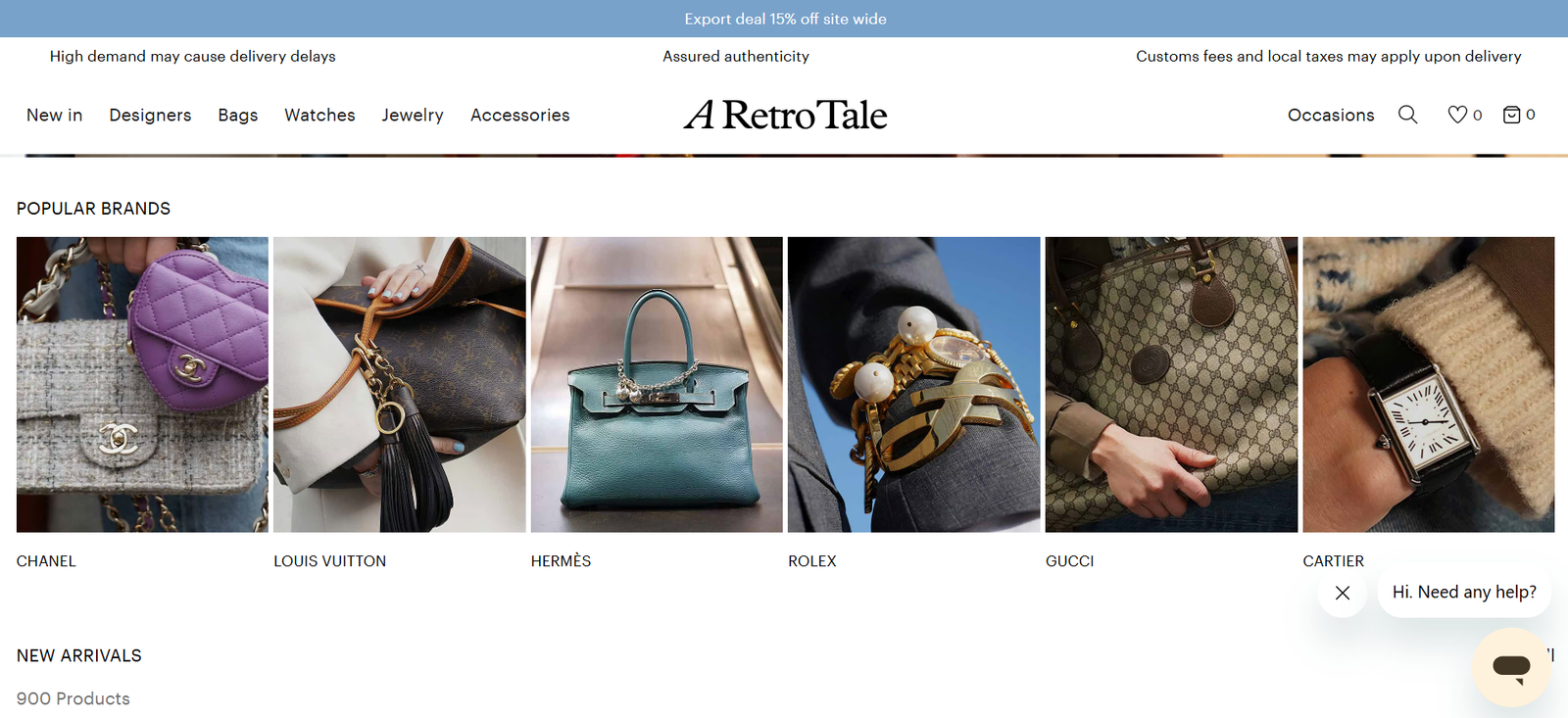
ARetrotale is a centralized operations platform built to streamline the entire lifecycle of luxury and vintage inventory—from customer intake and supplier ingestion to enrichment, publishing, and shipping automation.
The system acts as a single operational backbone, transforming fragmented and unstructured inputs into high-quality, marketplace-ready product data, while ensuring seamless synchronization across external systems.
The Problem
ARetrotale operates in a complex environment where inventory flows through multiple channels and systems. This created several operational challenges:
1. Unstructured Data Inputs
- Supplier invoices with inconsistent formats
- Customer submissions with missing details
- Image-only listings without structured metadata
2. Strict Output Requirements
- Marketplaces require accurate taxonomy, pricing, and compliance data
- Shipping providers require correct weights, regions, and customs details
3. Fragmented Systems
- Internal inventory states
- External platforms (product systems, marketplaces, shipping)
- Lack of a unified source of truth
Objectives
The goal of ARetrotale Admin v3 was to:
- Establish a single source of truth for inventory
- Improve data quality and consistency
- Enable fast and scalable admin workflows
- Reduce manual effort through automation
- Ensure reliable integrations with external systems
- Maintain full traceability of every item
Solution
1. Centralized Inventory Hub
At the core of the platform is a unified inventory system that connects:
- Internal workflow stages (incoming → enrichment → publishing)
- External identifiers (products, variants, marketplace mappings)
- Operational flags (verification, issues, review states)
- Source data (supplier inputs, customer submissions)
This ensures every item is:
- Trackable
- Auditable
- Consistently managed across systems
2. Structured Taxonomy System
To eliminate inconsistent naming and manual corrections, ARetrotale introduced a structured taxonomy model:
Brand → Model → Design → Variant
Key features:
- Controlled creation with duplicate prevention
- Validation of relationships (brand-model integrity)
- Safe deletion (preventing data breakage)
This enables repeatable and scalable enrichment, instead of one-off fixes.
3. Automation-First Enrichment (Invoice Prefill V3 + AI)
A powerful enrichment pipeline was built to handle real-world messy data:
- Automatic field extraction from supplier formats
- Detection of missing or weak taxonomy
- AI-assisted refinement for:
- Product names
- Model identification
- Variant inference (e.g., watches)
Important:
AI operates with strict guardrails, ensuring only high-confidence data is accepted.
The system is configuration-driven, allowing adjustments without code changes.
4. Reliable Integrations with Async Architecture
To handle external system instability:
- All critical processes run through queued jobs
- Built-in retry mechanisms for failure recovery
- Scheduled commands manage:
- Data synchronization
- Publishing workflows
- System maintenance
This ensures stability, scalability, and fault tolerance.
Core Workflow
From Messy Input to Publishable Inventory
Step 1 — Multi-Channel Intake
Inventory enters the system through:
- Customer submission flows (Sell Bags)
- Seller platform (Sell Vintage with offer workflows)
- Supplier invoice ingestion pipelines
Step 2 — Inventory Normalization
All inputs are converted into a standardized inventory record, forming the central processing unit.
Step 3 — Enrichment Pipeline
- Taxonomy mapping and validation
- AI-assisted refinement (if required)
- Confidence-based processing for quality assurance
Step 4 — Publishing & Synchronization
- Products are published to external product systems
- Marketplace listings are generated and synced
- Variant mappings are maintained across platforms
Step 5 — Shipping Automation
- Shipment data is generated based on region rules
- Orders are processed via shipping integrations
- Status updates are synced across all systems
Key Use Case
Sell Vintage → Inventory Conversion
When a seller’s offer is accepted:
- Inventory is automatically created
- Source data is preserved for traceability
- Consignment logic is applied
- Enrichment pipeline is triggered via background jobs
This removes manual intervention and ensures consistent data from the start.
Technical Architecture
- Backend: Laravel (modular, service-based architecture)
- Frontend: Inertia.js + Vue 3
- Async Processing: Queues & scheduled jobs
- System Design: Domain-driven modules (e.g., Sell Vintage)
- Integrations:
- Product management systems
- Marketplaces
- Shipping providers
Challenges & Solutions
Data Quality vs Speed
- Challenge: Fast workflows caused inconsistent data
- Solution: Taxonomy system + automated enrichment
Duplicate Management
- Challenge: SKU and mapping conflicts across systems
- Solution: Validation rules and normalized mapping logic
Integration Failures
- Challenge: External APIs were unreliable
- Solution: Queue-based architecture with retries and logs
State Synchronization
- Challenge: Mismatch between internal and external systems
- Solution: Dedicated sync services and reconciliation jobs
Results & Impact
- Faster Operations: Reduced manual workload through automation
- Improved Data Consistency: Standardized product structure
- Higher Reliability: Fewer integration failures
- Full Traceability: End-to-end visibility of inventory lifecycle
Conclusion
ARetrotale Admin v3 transforms a fragmented operational process into a scalable, reliable, and intelligent system.
It combines:
- Workflow automation
- Data standardization
- System integration
into a single platform that enables the business to operate efficiently at scale.
Where we started
ARetrotale faced operational inefficiencies due to fragmented systems and inconsistent data flows:
- Unstructured inventory inputs from multiple sources
- Manual and error-prone data enrichment processes
- Duplicate and inconsistent product records
- Integration failures with external systems
- Lack of synchronization between internal and external states
How we shipped it
We designed and developed a unified platform that:
- Centralizes inventory as a single source of truth
- Implements a structured taxonomy system for consistent data
- Automates enrichment through Invoice Prefill + AI-assisted processing
- Uses queue-based architecture for reliable integrations
- Synchronizes product, marketplace, and shipping states in real-time
Numbers that mattered
Reduced manual data entry and enrichment workload
Improved product data consistency across all platforms
Increased operational efficiency and processing speed
Minimized integration failures with retryable job systems
Enabled full traceability of inventory lifecycle
Inside the product